How to Start Homeschooling
Homeschool learning is a great option for many families. Making the decision to homeschool is not something people taking lightly.
However, if you aren’t directly connected to someone already in the schooling community, figuring out how to start homeschooling can feel very confusing.
As a former public school teacher, turned homeschool mom, I will share the best homeschooling tips and homeschooling hacks I know.
I will walk you through questions to help you decide if homeschooling is the right choice for your family.
Then, I will share some homeschool curriculums with you so you have a place to start looking.
I will provide encouragement along the way, because feeling like you have someone in your corner is the start of having a successful homeschooling journey!
But first, a little about me and our homeschooling adventure!
Who am I, and why should you listen to what I have to say? Great question!!
I’m a licensed teacher who taught in a public school classroom for several years before having my own children and making the decision to become a stay-at-home mom.
One thing led to another, and before I knew it, we decided homeschooling was the best choice for our family.
I am well aware of how broken the school system is because I’ve lived it.
It is truly a mess.
As a parent, I wanted to do better. I wanted to offer the best of myself for our kids to have the best chance at achieving their dreams and goals. Homeschooling truly is a family effort.
I spent a lot of time doing research about all things homeschool. I learned about homeschooling methods, free homeschool resources, homeschool co-op choices, Christian and secular homeschool curricula, homeschool legalities, and so much more.
As a busy mom, I know how precious time is.
Since I have already spent countless hours doing homeschool research, I want to save you time and energy and share all the things I’ve learned.
Leaving the public school world and entering into homeschooling has been a JOURNEY.
And it still is.
Every year, we reassess the needs of our family and make decisions based on those needs. I hope what I have to share is helpful for you as you make decisions for your family.
If you are CERTAIN you’re ready to start homeschooling your child(ren), skip this section!
*This post may contain affiliate links, which means I receive a small commission, at no extra cost to you, if you make a purchase using this link. I only recommend products I love or would personally use.
Questions to Ask Before You Begin Homeschooling
Do YOU want to homeschool your child or children?
First and foremost, you need to decide if YOU want to homeschool your children.
Homeschooling is a commitment in so many ways. It’s time, money, resources, and most days sanity. Are you ready to share your time and space with your kids all day long?
What is your WHY for wanting to homeschool?
What is your motivation behind wanting to homeschool your kids?
Are you trying to provide a quality education that you’re in complete control of?
Are you trying to remove your child from a harmful situation at school?
Do you want to homeschool starting with Kindergarten?
It’s important to know and be able to express your WHY to others when making the decision to homeschool. More on this topic in a bit!
Do you want to be with your kids A LOT?
Homeschooling is not for the faint of heart.
You’re with your kids A LOT. Like ALL DAY!
Some people are not prepared to have other people in their space, looking at them all day long. Some days can be mentally challenging as your personal time becomes minimal.
Your kids will look to you for everything all day. Make sure you’ve had conversations with your support people so you can arrange to have some time out of the house by yourself, especially if that’s how you personally recharge.
Are you prepared to learn a lot about homeschooling and your family?
Homeschooling is a journey. You’ll learn so much as you go along. You’ll learn about yourself and your kids in ways you never imagined. It really is a beautiful journey.
You’ll learn about their learning styles and their interests. You’ll learn about things they don’t like.
Homeschooling takes time and energy, but it is something that can constantly be changed and adjusted to meet the needs of your family.
Is your spouse/partner/co-parent supportive of your decision to homeschool?
I cannot stress this one enough.
It is essential that all parental figures are onboard with homeschooling to some degree. If one person is against homeschooling, it’s going to be a constant fight.
I’ve heard of people even getting divorced because they don’t agree on how their kids should learn. It can get ugly.
You should have those important conversations now. Even if one person doesn’t want any part of homeschooling, but is willing to support the other, that will work.
Have these hard conversations now!
Do you have the finances to support your decision to homeschool?
Here’s the thing- homeschooling doesn’t have to be expensive.
There are so many free resources available, homeschooling on a budget can be done.
If one person is quitting their job to stay home and homeschool, make sure you’ve looked at the budget to identify how much you’ll have to spend on homeschool supplies.
The only true necessities are the basic school supplies. From there, it’s up to you how you want to supplement your child’s education.
I will share more in a bit about how you can homeschool with minimal resources.
Are your kids supportive of your decision to homeschool?
Have you talked with your kids about your desire to homeschool?
If you’re first child is preparing for Kindergarten and they’re never going to know any different, that is a much easier decision than pulling a child who has already established a school routine.
When you make the decision to homeschool, your child(ren) need to be a part of the conversation. Even though you may feel like you’re doing “what is best” for them, they need to have a chance to share their thoughts on homeschooling before any decisions are made.
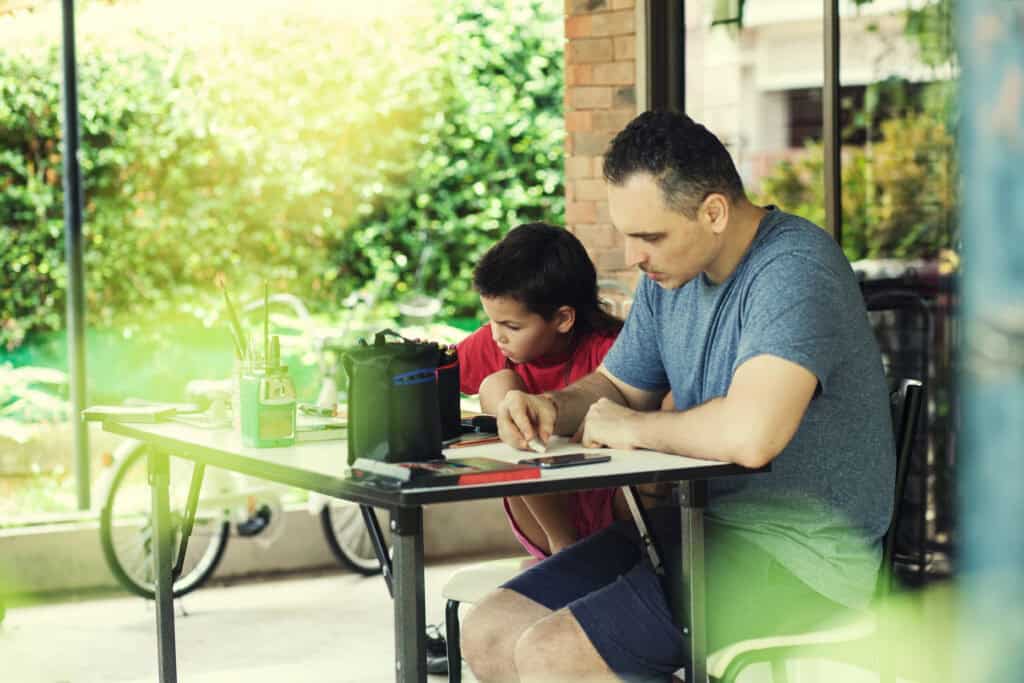
When you’re ready to jump into homeschooling, consider a homeschool planning retreat for yourself! Here’s how to do it!
Homeschooling- Where to Start?
Know Your Homeschool Laws- HSLDA
One of the first things to do before you start homeschooling is research the homeschool laws in your state. If you’re just starting to dip your toes in the water, HSLDA’s directory of homeschool laws by state is where you should start.
HSLDA, Home School Legal Defense Association, is an organization that is there to help families know their legal boundaries and support them when those boundaries are compromised. You can choose to join for a minimal fee, and they’ll help provide legal help should you ever need it.
How Much Time and Money Can You Invest in Homeschooling
As mentioned before, homeschooling is going to consume time and resources. Even though homeschooling doesn’t require a 9 am – 4 pm mentality, you will be putting time into homeschooling.
Equally as much, there is a financial investment as well. For some families, this is as simple as buying new school supplies every year and having an unschooling approach to homeschooling- one that is directed by the student using everyday situations as learning tools.
Other families will choose to invest in participating in a co-op and/or having a curriculum for their kids to follow.
There is no wrong decision here.
But again, you need to have some honest conversations about your expectations of what your homeschool will look like and constantly be flexible and willing to adapt as the needs of your family change.
Forget About What You Know “SCHOOL” To Be
As a public school teacher turned homeschooling mom, this has been the hardest part for me.
I have had to deschool myself. Simply put, I’ve had to forget everything I’ve always known and thought school to be. Choosing to homeschool for my family meant schooling to the beat of our own drum. I didn’t want to do schooling at home.
I wanted to have the freedom to decide what our days look like and where our family invests our time, energy, and resources.
Your homeschool setup will be unique to you and your family. But first, forget everything you thought you knew about school and learning, and be willing to look at your homeschool journey with fresh eyes.
Research Various Homeschool Methods
Entering the world of homeschooling can feel like a foreign space. There are several homeschooling methods, and you may learn that not a single one matches what you want for your family. That’s OK.
As you find your homeschool inspiration, you’ll discover the homeschool method(s) that works for your family.
I want to share some homeschool methods with you, so you’ve heard some of the terms.
Unschooling– children learn by pursuing their interests without a structured curriculum
Charlotte Mason– this method approaches education through “living” books
Montesorri– hands-on, self-paced learning through personal discovery
Classical– an education method based on the Trivium that teaches students how to think for themselves
Eclectic– a homeschool method that uses a variety of homeschool methods for their children to learn
Unit Studies– a central theme guides the learning for every subject area
Schooling at Home– essentially doing all things done in public school, but at home
Roadschooling– learning while traveling and using local resources to teach your children
As I said before, there is no “wrong” way to homeschool. But it’s important to know what your approach to homeschooling is so you can select homeschooling resources that support your teaching method.
Attend a Homeschool Conference
I know you’re wondering how to begin homeschooling, and I was once in the same place. A friend encouraged me to attend a homeschool conference so I could be exposed to a lot of things in one place, and OH MY GOSH was I exposed.
The Great Homeschool Conventions are HUGE! I knew it was at the convention center, and I should have considered how many vendors and homeschool curriculum companies could possibly be there, but it still didn’t prepare me.
I was so overwhelmed that the first year I went, I literally picked up information from all the booths and just went home. I had no idea what questions to ask, no idea what I was actually looking for, and a bag full of information.
It took me a day or 2 to even open the bag. But once I started sorting through the material, I found things I liked, and other things I knew were not right for our family.
It was a step in the right direction.
I have attended that homeschool conference every year since, because I now know what I’m looking for. I know which vendors I would like to speak with, and which conference speakers match our family’s learning and teaching styles.
That first year was HARD, but every year since has been a refreshing start to our homeschool journey. I highly encourage you to find a homeschool conference in your area and just go.
You may leave overwhelmed, and possibly even discouraged. BUT, give it a few days and peek inside the bag. This is one of the best homeschool tips for beginners I can share.

Preschool and Kindergarten Don’t Need a Formal Curriculum
With my degree in education, I’ve always been trained to use a curriculum. Once it was all on paper and in textbooks, but now, a lot of the curriculum has been put online.
And that’s fine.
But here’s the thing- you 100% do not need a curriculum for the younger years.
It’s important to know what skills you want to work on and help your child develop, but by no means do you need to use a curriculum. I actually do not use a curriculum when my kids are in preschool and Kindergarten.
I want this time to be a safe space for learning and failure. I want them to figure out what they enjoy and what they’re good at. I want them to feel confident in the things they’ll use the rest of their lives- numbers, letters, simple words, communication skills, emotional awareness, and so much more.
This is the age where those are the things that really matter.
Hear me out, though- there’s also NOTHING wrong with using a curriculum for the younger years. NOTHING! You absolutely should do what you are comfortable with and what is right for your family.
This is just my two cents.
Read Together Often
Reading together is the best way you can prepare your child for learning.
It teaches them to be present in the moment, to be a good listener, and it helps with their understanding of words.
Reading also opens up opportunities for important conversations you may have never even considered.
It will help develop their fluency level, and create a natural space where they want to read and enjoy books.
There are numerous benefits to reading with your kids, and it’s a simple way to spend time together.
Pray Through All Your Decisions
If you are a believer, I encourage you to first pray through all your thoughts and considerations. Pray that the Lord would direct your conversations and your decisions. I encourage you to trust that God knows the best plan for your family and that He will guide you to all the right things.
Manage Snacks- They’ll Eat Everything All Day Long
Oh my word- snacks!
I don’t know the science behind it, but I will tell you that it seems like homeschooled kids need snacks ALL. DAY. LONG.
If the snacks are available, the kids think they need them.
Funny, but in all seriousness, I encourage you to develop ground rules and expectations for snacks. I have even seen parents who have created a snack store, and kids use Monopoly money to “buy” snacks throughout the day.
Create a Morning Routine
Depending on the homeschool method you think is best for your family, you may want to develop a homeschool routine.
For many families, this resembles a morning homeschool routine.
Get up, get dressed, eat breakfast, brush your teeth, and be ready to begin school. There will then be a daily rhythm for schooling.
Begin with a Bible lesson, everyone works on their math, a group history lesson, a science experiment, etc.
There are ways you can work through the day and have lessons together, and you can also organize your homeschool day in such a way that everyone works through their own things.
Again, there is no wrong answer, but this is certainly something you’ll want to think through.
Some families do not use a schedule at all. Our family is this way. We work our way through schoolwork as time allows, and just make sure everything is caught up by the end of the week.
Have a Plan for Electronics
I feel like using electronics is becoming a hot-button issue, like politics and money.
There is a fine line between discussing them and arguing about whether kids should be using them at all.
If you have electronics in the house, decide how and if they’ll be used for learning.
I know some parents use them in their schooling every day. Other parents use screen time as a reward for a job well done.
I encourage you to figure out and have a plan of how electronics will be used in your home, or if you plan to not have a place for them at all.
Create a Fun Learning Space- If You Want
In case you haven’t already caught on to the theme, there is no wrong way to homeschool your kids. Unless they’re literally learning NOTHING, you’re doing ok. Keep going.
If you want to have a “classroom” or a “school room,” then make one. Put up learning posters, have desks, and a craft station. Have a reading nook and manipulatives.
But if you don’t have the space or resources to create an entire homeschool room, that’s OK too.
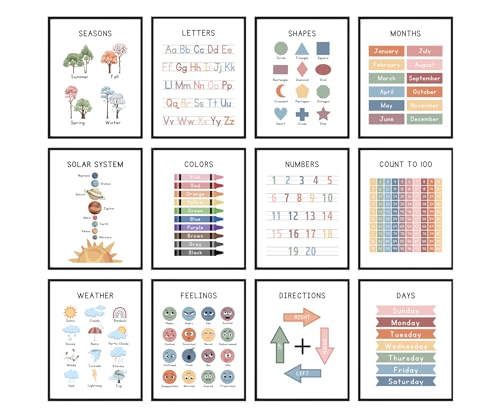

Collect Your Homeschool Supplies
Every child needs to learn to read and write a some point. This means at the bare minimum, you’ll need pencils, paper, and some books. These are the basic homeschool must-haves. They are the bare-bones supplies you’ll need to teach your child.
With that said, I know many people will desire to have many other supplies to homeschool their children.
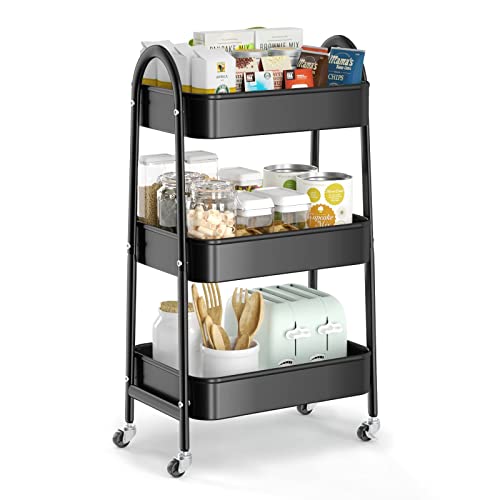
I encourage you to collect your homeschool supplies and have them together in one place so you always know where things are. This will also help your child be able to find what they need. I like to keep an art cart with craft and school supplies. I also like to keep a space for each child to have all the things they need for their learning.
Here are my favorite homeschool supply storage solutions for all spaces, especially when you don’t have a homeschool room!
How to Create Homeschool Lesson Plans
You can create homeschool lesson plans, but you don’t have to. I know some people come into homeschooling because they don’t like the structure of a regular classroom.
But if you need something to guide your homeschool, then creating homeschool lesson plans is probably the right choice for your family.
As I mentioned earlier, it may be helpful to create a homeschool routine. This will help guide you and your children of the expectations for the day.
Similarly, lesson plans will help keep your family on track to achieve the goals you’ve set. Lesson plans can be an overview of the month, and then you can break down each day or week into activities and assignments.
You can do this for every child in your family so that each kid has their own learning plan for the day/week/month/year.
I’m currently working on a homeschool planner you’ll be able to purchase on Etsy, so stay tuned for that!
You Don’t Have to Do “GRADES”
For the early years of homeschooling little ones, you don’t have to keep grades. However, in high school, keeping grades is important. As you prepare to graduate your child from homeschooling, you’ll want to keep track of their grades to be able to create a high school transcript.
What I appreciate about homeschooling is the chance for learning to be just that- learning. There are no strings attached that tell you you’re failing at something. It creates opportunity after opportunity to try again. It allows your child to learn at their own pace and not have homework.
For me, grades were something that told me whether I was “making it” or “falling behind”. It told me if I was better than or less than my peers. Now, as a homeschooling parent, I have the chance to change that for my kids. And so do you!
Your kids will spend the rest of their lives learning. There is no need to place a “grade” on every assignment that tells them they’re failing something. Come alongside them and work through the hard things so they know what success feels like. When they know what success feels like, it’s what they’ll always strive for.
Take Learning Outside
Any chance you get, go outside. Read outside, play outside, experiment outside. There are so many benefits to being outside. Fresh hair, grounding with your feet in the grass, the amazing warmth of the sun.
Homeschooling can be so much more than learning. It is also about teaching your kids to take care of their whole body.
Our kids enjoy taking their school work to a park and then playing afterwards. We enjoy going on field trips, hikes and playdates. Anything that gets us outside is a good day.
Choose a Curriculum
I have created an entire post about choosing a Christian homeschool curriculum. I know many prefer a secular homeschool curriculum, so I will quickly share a few options.
I know this seems like a long list, but I promise you’ll want to take your time picking the best homeschool curriculum to meet the needs of your family.
Find a Homeschool Co-op or Homeschool Community with Friends
I know the allure of homeschooling is that it’s something you can do on your own.
For some people, that idea works out great. For others, they want something more.
They want a community of like-minded people who are also homeschooling their children.
Co-op groups can be as simple as getting together and letting the kids play at a park, to something far more structured like a Classical Conversations co-op.
There are co-ops that meet once each week at the same day/time, and there are other hybrid co-ops that meet 2-3 days a week, and students work on things at home the other days.
I highly recommend finding Facebook homeschool groups in your area. Discussion about different co-op opportunities are happening in those groups and it’s the best place to find out what is available where you live.
Don’t Compare Your Homeschool to Other Families
The beauty of homeschooling is that it’s your story to write.
And just like anything else in life, comparison is the thief of joy. Truly, it is.
If you begin to compare your new homeschool journey, that feels like the car is flying down the hill as you’re still trying to put the wheels on to someone else who has been homeschooling their kids for 5 years, you might just feel like you’re failing.
But you’re not.
There are very few people who I have come across in the homeschooling community who would not be willing to offer advice, recommendations, or support.
In this community, everyone does things differently. And that’s the beauty of it.
You decide what homeschooling looks like for your family. No one else.
Know What to Say When Others Question You
I hate to break it to you, but there will ALWAYS be someone who questions you.
They may want to know why you’re homeschooling when they went to public school and turned out just fine.
Others will want to know how you can afford to stay home and homeschool your kids.
And don’t be surprised when you’re grocery shopping with your kids in the middle of a “school day” to avoid the evening crowds, only to be asked by the cashier why your kids aren’t in school. (Seriously- this one happens to us all the time, except they ask my kids! AHHHHHH)
I recommend kindness. It’s helpful to know what you plan to say. You owe no one an explanation, but something as simple as “we homeschool” can be enough.
As for family and friends who will undoubtedly question you, you need to have a more thought-through answer. You don’t need a speech, but prepare for a variety of questions.
Why are you homeschooling? Do you think you’re qualified to homeschool the kids? Can you guys afford to homeschool the kids? Why isn’t public school good enough? How long do you think you’ll homeschool for? Can the kids graduate from homeschool?
And. The. List. Goes. On.
Even the most well-intentioned people will pepper you with questions.
Again, kindness is the best way to go. But stand your ground and know the decision you have made for your family is the best decision.
Create a Homeschool Schedule That Works for Your Family
There is no one-size-fits-all homeschool schedule. You just need to figure out what works best for your family and do that. The rest will fall into place as you figure things out.
Decide which days you plan to do schooling if you plan to have structure. Then, go from there!
Don’t Overschedule Your Family
This is one thing I cannot stress enough!
If you began homeschooling your kids to have more free time and to spend more time with your kids, don’t fill your calendar with commitments.
Pick the things are most important and put those things on the calendar first. Then weed out all the things that don’t support the direction you want your family to head.
Take a Break When Your Family Needs a Break
One of the amazing things about homeschooling is that you have the entire year to get schoolwork completed. Many homeschool families school year-round.
This means you can take breaks when your family needs them and push forward the rest of the time.
It may mean you take a week or two at the holidays, and school the rest of the year. You can also run your school year like a standard school year.
The most important thing is to make sure you are meeting your state’s legal requirements for homeschooling. Otherwise, it’s up to you what your homeschool schedule looks like.
You’re a Parent BEFORE You’re a Teacher
Throughout my years of homeschooling, the biggest takeaway I have is that I am their mother before I am their teacher. Nothing about schooling my kids is more important than maintaining a good relationship with them.
If I ruin the relationship with my kids over trying to push something related to schoolwork, I am missing it.
Developing strong, positive, healthy relationships with each of my kids is one of the benefits of homeschooling them. I get the chance to be the person who knows them best, can support them the most, and encourage them when they need it.
But, if I’m not careful, I can also be the person who single-handedly tears them down the most.
There is a super fine line between learning alongside my children and forcing learning upon them. I choose to prioritize my relationship with them over all the other things. Positive relationships are the foundation for having a good experience homeschooling your kids.
I know taking the leap into homeschooling can be incredibly intimidating. I GET IT! Every homeschooling parent has once been here, too. But, just like every other homeschooling parent, you will find your groove and make the best homeschooling plan for your family!
Please ask any questions you have, and I would be happy to help!

More Homeschooling Tips and Ideas!
Best Books on Audible for Homeschooling
How to Avoid Homeschool Mom Burnout
The owner of this website is a participant in the Amazon Services LLC Associates Program, an affiliate advertising program designed to provide a means for sites to earn advertising fees by advertising and linking to Amazon properties.